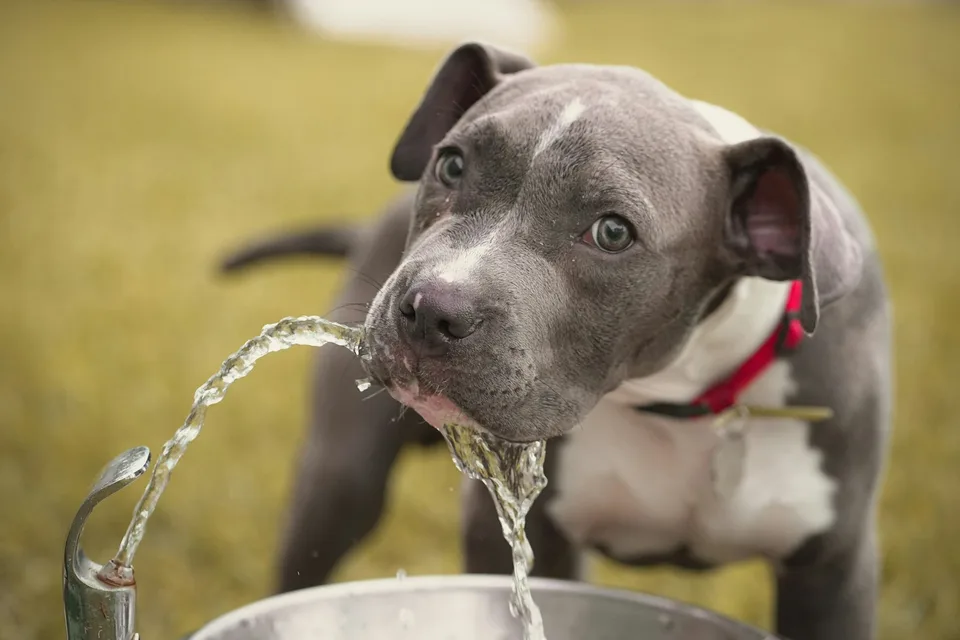
A dog doesn't sweat the way we do. It cools down mainly by panting, and that works less and less well as temperature and humidity climb. In Athens, where heatwaves now often pass 40°C and concrete holds its heat until late at night, the six o'clock walk can be the most dangerous hour of a dog's day.
What follows is general care advice, not Petit-o rules. If your dog has a health condition, ask its vet before summer starts.
When to go out
In summer, long walks belong in the early morning and late evening. At midday and in the afternoon, a short toilet break in the shade is enough.
Be aware that the late afternoon is deceptive. The air has started to cool, but streets and walls have been storing heat since morning. A route with bare earth and trees is far cooler than a pavement: see parks and shaded routes in Athens.
Pavement is hotter than the air
A dog's pads touch surfaces that, in the sun, get much hotter than the air. The practical test is simple: hold the back of your hand on the pavement for a few seconds. If you can't stand it, neither can your dog.
Burnt pads show up later: the dog limps, licks its feet or refuses to walk.
Which dogs are most at risk
- Flat-faced breeds such as French bulldogs, pugs and boxers. A short muzzle makes panting less effective.
- Older and overweight dogs, and those with heart or breathing problems.
- Puppies, which don't stop playing even once they are too hot.
- Dogs with a thick double coat, such as huskies and malamutes, which now live in Athens flats too.
For these dogs, even an energetic walk on a merely warm day can be too much.
Signs of heatstroke
Heatstroke develops quickly. The early signs:
- very heavy, noisy panting that doesn't settle,
- thick drool, very red gums and tongue,
- unsteadiness, weakness, refusing to go on.
If it progresses: vomiting or diarrhoea, confusion, collapse, seizures.
What to do in the first few minutes
The UK's Royal Veterinary College sums it up in one phrase: cool first, transport second.
- Move the dog into shade or a cool room straight away.
- Pour water over it, cool or simply from the tap. Ice isn't needed; the water only has to be cooler than the dog. Wet the belly, armpits and legs above all.
- Put it in front of a fan or in a draught, so the water evaporates.
- Offer small sips of water without forcing it.
- Call the vet and take the dog in, even if it seems to have recovered. Internal damage isn't always visible from outside.
At home, on the balcony, in the car
Car: never, not for five minutes, not with a window open. A parked car heats up very quickly, even in the shade.
Balcony: the tiles and glass of an Athens balcony are scorching at midday. A dog shouldn't be left there without shade, water and a way back inside. The law also says that a dog living outdoors must have a cool, shaded shelter in summer; more in what the law asks of pet owners.
Flat: shutters closed on the south and west sides, fresh water in two places, and access to the coolest room or the bathroom tiles.
Clipping: for double-coated breeds, shaving isn't an obvious fix. Ask your vet or groomer before you decide.
When someone else walks your dog
If you work during the hours your dog needs to go out, or you are away in August, tell the sitter from the start what you want: times, length, a shaded route, water with them. Petit-o sets no hours or temperature limits for walks; the two of you agree on those, and you do it by writing to them before you decide.
Also note in the request if your dog falls into one of the groups above, and leave the vet's phone number with the rest of the checklist for the sitter. For the walks themselves, see dog walking in Athens.