Since September 2021, the duties of anyone who owns a dog or cat in Greece have been set by Law 4830/2021 (Government Gazette A' 169/18.9.2021). Most people know a pet "needs a chip". Fewer know that the same law covers neutering, the leash on walks and how many hours a dog may be kept tied up.
Below are the main duties in Article 9 and the fines in Article 35, as published. This is general information and not legal advice; laws get amended, so for your own case what counts is the official text of the law (in Greek) and what your vet or municipality tells you.
Microchip and the national registry
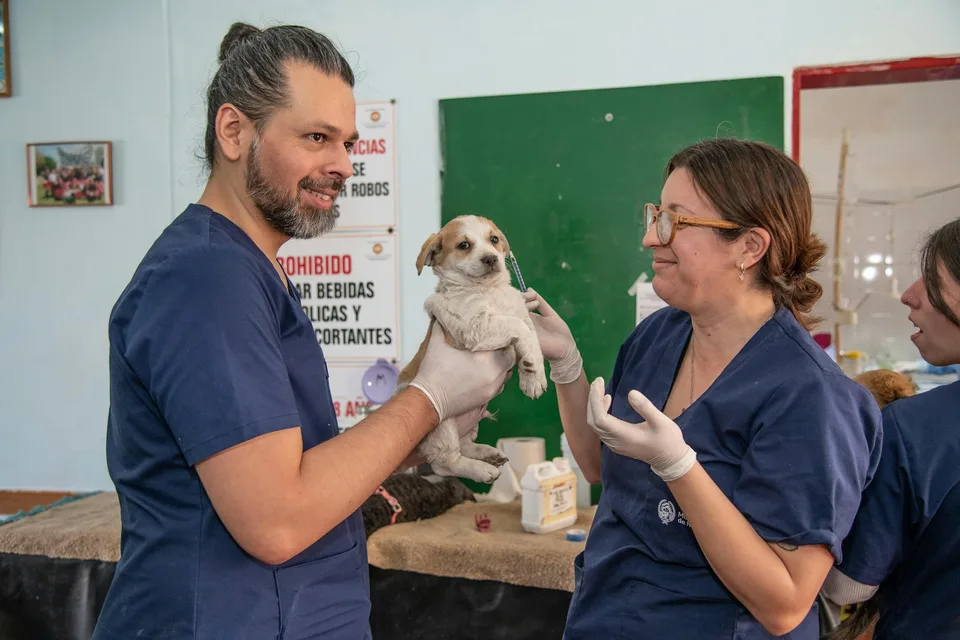
Every owned dog and cat must be microchipped and recorded in the National Registry of Companion Animals. For an animal born in your home, that happens before it leaves its birthplace and in any case within two months of birth.
If your details or the animal's change (address, phone, new owner, loss), the registry must be updated. Chipping and registration are done by a vet.
Removing the microchip is forbidden unless a vet certifies it is necessary and a prosecutor orders it.
Vaccinations and vet checks
The law asks for annual vaccination, where one is required, and a vet check. Both are shown in the animal's electronic health booklet, or in its passport if it has one. If you travel abroad with your pet, the passport is mandatory.
Neutering or a DNA sample
This is the duty most people don't know about. A dog or cat must be neutered:
- within six months of the day you acquired it, if it is over one year old,
- within the six months after its first birthday, if it is younger.
A vet can set a different timing for particular breeds. Neutering isn't required if a sample of the animal's genetic material (DNA) has been sent to the laboratory named in the law.
On walks
For dogs the law is specific:
- Always accompanied. A dog doesn't go out alone and may not leave your property freely.
- On a leash and close by. The duty also applies to anyone else who walks the dog. Dog parks are the exception.
- Faeces are picked up immediately.
If a friend, relative or sitter does the walk, the same rules apply. It is worth telling them, especially if your dog is used to walking off the leash.
At home and in the yard
- A dog isn't kept permanently tied, and in any case not for more than two hours a day.
- If it lives in a yard or other outdoor space, it needs a shelter that is cool and shaded in summer and protected from cold, wind and rain in winter.
- A cat doesn't live in a cage.
- Cropping ears or tail is forbidden unless there is a medical reason.
- The animal must have enough contact with people or other animals not to live in isolation.
The last point touches everyday city life too: see how long a dog can stay home alone and what applies to a cat alone at home.
If you can no longer keep your pet
Abandonment is forbidden. If you can't find a new owner yourself, you notify your municipality, which lists the animal on the adoption platform for two months. If nobody comes forward, you hand it over to the municipality with a sworn declaration and pay €300 for a dog or €100 for a cat. For the next three years you may not acquire another companion animal.
The fines
| Breach | Fine |
|---|---|
| No microchip or not in the registry; loss or change of details not declared | €300 |
| Not neutered and no DNA sample sent | €1,000 |
| No vet check or annual vaccination; ear or tail cropping | €1,000 |
| Walk without an escort or without a leash | €300 |
| Faeces not picked up | €100 |
| Cat living permanently in a cage | €300 |
| Travel abroad without a valid passport | €300 |
| Microchip removed without medical reason | €3,000 |
| Cruelty or abandonment | €5,000–15,000 per animal |
If you put the omission right within ten working days of the notice, the neutering fine is cut by 70% and the microchip fine by 50%. Each repeat of the same breach doubles the fine.
If your dog causes damage
An owner is liable for any damage their animal causes, under Article 924 of the Greek Civil Code. A bite or a road accident can cost far more than any fine, which is one reason some owners look at pet insurance with third-party liability.
What this means when you are away
The duties don't stop when you go on holiday. Before you leave your pet with someone, make sure the microchip shows your correct details, and leave the health booklet with the rest of the checklist for the sitter.